
Better results. Less chemistry.™
- Careers

State-of-the-Art Technology
Our tech-enhanced cleaning transforms your process, boosts efficiency, and promotes environmental sustainability.

Proven Results
With over six generations of expertise, our team thrives on solving challenges. Your success is our success.

Resource Library
Access product bulletins, safety information, and product documents, along with more resources for additional information.

About Hubbard-Hall
Our mission is to help manufacturers tackle complex surface cleaning, finishing, and wastewater treatment problems.

Contact Our Experts
Our people. Your problem solvers. Connect with a Hubbard-Hall representative today.
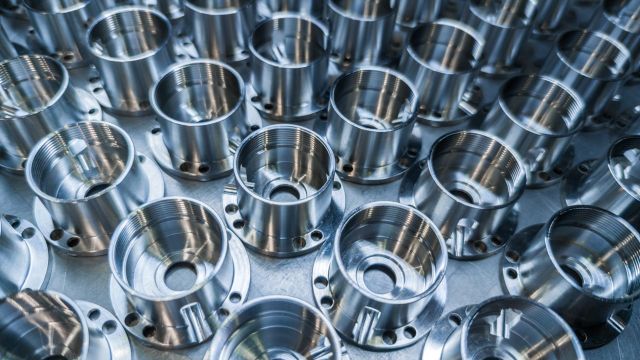
Aluminum Cleaning
Effective aluminum cleaning removes oils, lubricants and other contaminants while preparing your parts for anodizing, coating, bonding or assembly. Just as importantly, it preserves the surface finish and dimensional tolerances your application requires.
From high-volume packaging to automotive, aerospace and defense components, the right process starts with your alloy, contamination and next manufacturing step. Poorly matched chemistry or operating conditions can leave residue, damage the surface and lead to costly rejects or rework.
The goal is to get parts clean in the time your line allows, without damaging them or carrying contamination into the next tank.
Speak to an expert
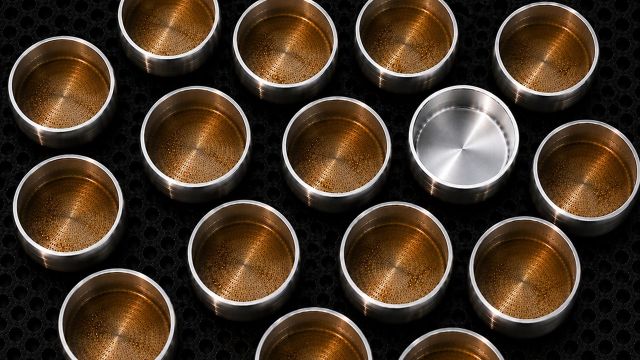
In-Line Cleaning of High-Volume Aluminum Parts
In this cosmetic packaging application, Hubbard-Hall developed an acid cleaning process that removed oil in 45 seconds, prevented downstream contamination and saw a 5x reduction in rejects. Watch the video to see how the manufacturer changed its cleaning process.
The alloy. The soil. The next step.
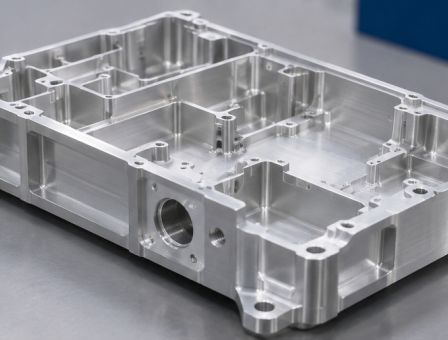
Know the alloy.
Aluminum alloys respond differently to cleaning chemistry. Select a process that removes contamination while protecting the surface finish and dimensional tolerances your part requires.
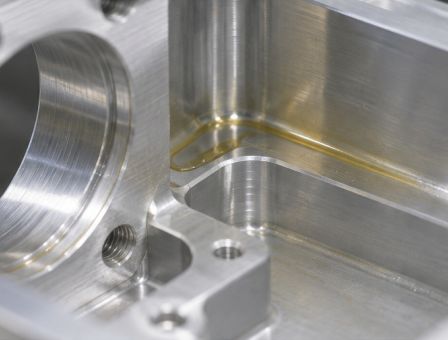
Identify the contamination.
Machining fluids, forming lubricants, particles and oxides require different approaches. Match the cleaner to what needs to come off—including residues that may be difficult to see.
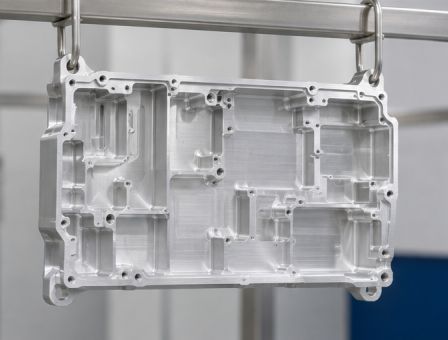
Define what comes next.
From anodizing and conversion coating to bonding or assembly, the next operation determines how clean the surface needs to be. Match cleaning and verification to your process and customer requirements.
Aluminum cleaning questions, answered.
Stains, residue or inconsistent results? Get practical answers from experts who have investigated and solved aluminum cleaning challenges in the field.
Begin by removing oils, machining fluids, forming lubricants and other soils with a cleaner suited to the alloy. Rinse thoroughly to limit cleaner and soil carryover. Where the finishing specification requires it, follow with controlled etching, deoxidizing or desmutting before anodizing.
Cleaning, etching and desmutting serve different purposes. The correct sequence depends on the alloy and desired finish; every part does not require the same preparation.
Residual oil, cleaner residue or uneven surface preparation can contribute to inconsistent appearance and finishing defects. Verify cleanliness before parts enter the anodizing process.
Use chemistry appropriate for the alloy and control concentration, temperature and exposure time. Longer cleaning cycles or higher temperatures can increase surface attack rather than improve results.
When the surface must retain its brightness or dimensions, evaluate a non-etching process under actual production conditions. When etching is required, establish a controlled target that supports the next operation.
Possible causes include incomplete soil removal, reactions with alloying elements, contaminated baths, inadequate rinsing and handling after cleaning.
Etching can leave alloying constituents on the surface as smut, requiring a separate desmutting step. Contaminated rinse water, fixtures or gloves can also transfer material back onto a clean part.
Troubleshooting should follow the part through the full process, including cleaning, rinsing, handling and downstream operations.
Verify aluminum cleanliness using a method matched to the contaminant and the next process’s requirements. Visual inspection and water-break checks can help screen for contamination, while water contact angle measurement provides quantitative data about surface condition.
Through Infinity Surface Intelligence, Hubbard-Hall partners with Brighton Science to bring manufacturers BConnect, a platform that collects and shares surface-readiness data from connected measurement devices. This helps teams evaluate cleaning consistency, investigate adhesion risks and compare performance when introducing a new cleaner or changing cleaning technologies.
Hubbard-Hall’s technical experts can assess your operation onsite and work with Brighton Science to develop a data-based approach to more consistent cleaning. For aerospace and defense components, verification should align with applicable customer and process specifications.
50%
By combining cleaning and conditioning agents into a single formulation, our formulations reduce processing steps and chemical costs – sometimes by as much as 50%.
Aluminum Soak-Ultrasonic Cleaners
| Product | Powder or Liquid | pH | Etching vs. Non-Etching | Non-chelated | Phosphate-Free |
| AquaEase 2289 | Liquid | Acidic | Non-Etching | Yes | Yes |
| Lusterclean 40 LF | Liquid | Mildly Alkaline | Non-Etching | Yes | Yes |
| AquaEase SL 80 | Liquid | Moderately Alkaline | Non-Etching | Yes | Yes |
| AquaEase PL 72 A32 | Liquid | Mildly Alkaline | Non-Etching | Yes |
Aluminum Spray Cleaners
| Product | Powder or Liquid | pH | Etching vs. Non-Etching | Non-chelated | Phosphate-Free |
| Lusterclean 40 LF | Liquid | Mildly Alkaline | Non-Etching | Yes | Yes |
| AquaEase PL 732 | Liquid | Mildly Alkaline | Non-Etching | Yes | |
| AquaEase PLA 915 | Liquid | Acidic | Non-Etching | Yes |

Webinar: Overcome the Challenges of Cleaning Aluminum
Hubbard-Hall expert Mike Valenti discusses the basics and challenges of cleaning aluminum and real life examples from the field.


What is your aluminum cleaning process costing you?
Tell us about your alloy, contaminant, cleaning equipment and next process step. Our technical team can help investigate surface defects, evaluate chemistry and identify opportunities to reduce rework or unnecessary processing.
Discuss your aluminum cleaning challenge with us today.